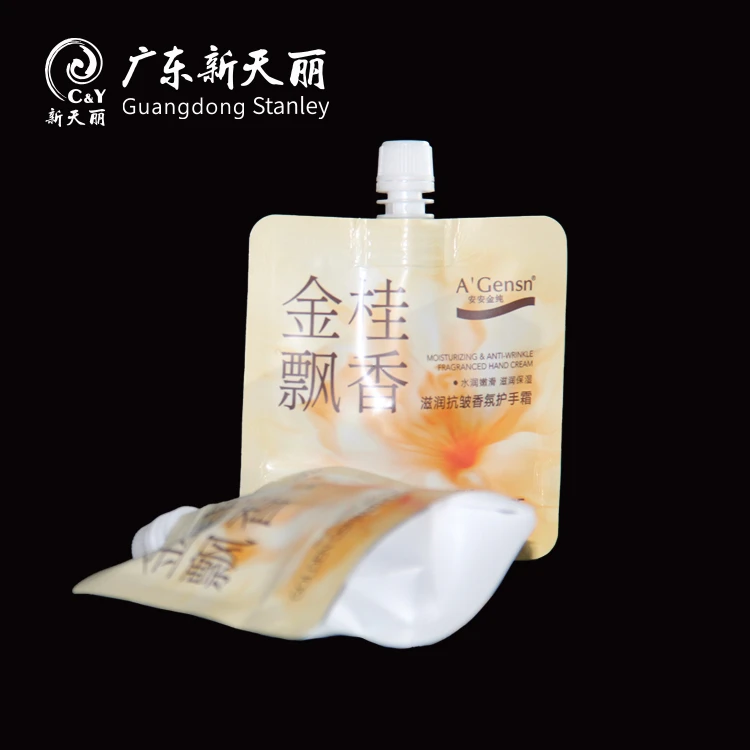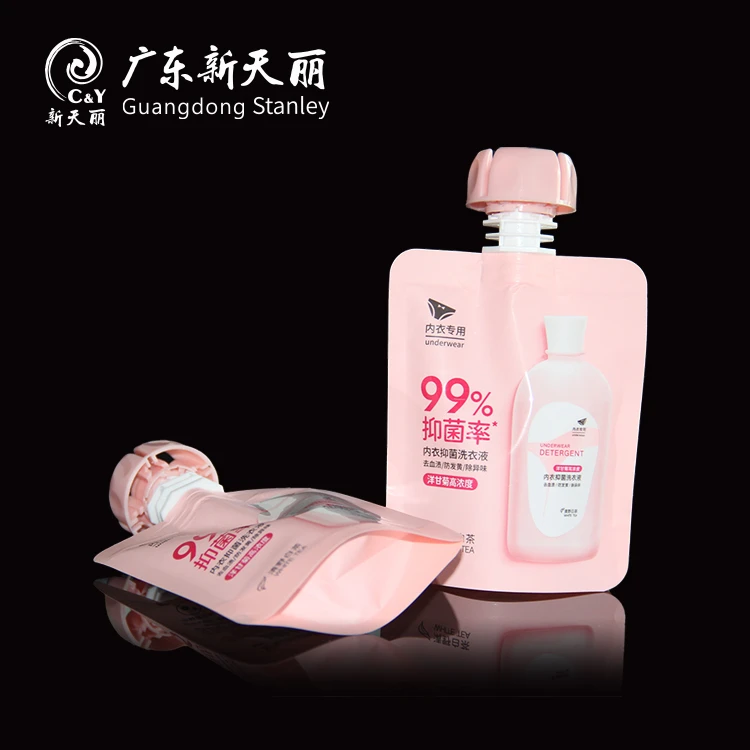
Selecting the right spout size for a beverage pouch requires a thorough evaluation of beverage viscosity, the presence of fruit pulp or particles, the intended consumption method, packaging volume, and filling equipment. Choosing the right spout specification improves the dispensing experience, reduces clogging risk, and lets beverage brands develop customized packaging tailored to specific market demands.
Why Spout Size Matters in Beverage Pouches
In the development of flexible beverage packaging, the spout size—though seemingly a minor detail—significantly impacts product dispensing, the consumer’s drinking experience, and compatibility with production lines.
Different products—such as fruit juices, sports drinks, yogurt-based beverages, and fruit purées—have distinct flow requirements that the spout must accommodate.
For instance, clear fruit juices typically flow easily, whereas juices containing pulp or thick milkshakes require a spout that allows particles to pass through without excessive flow resistance. If the spout channel is too narrow, it can lead to restricted flow or even clogging; conversely, an ill-suited specification may unnecessarily increase the cost of packaging components.
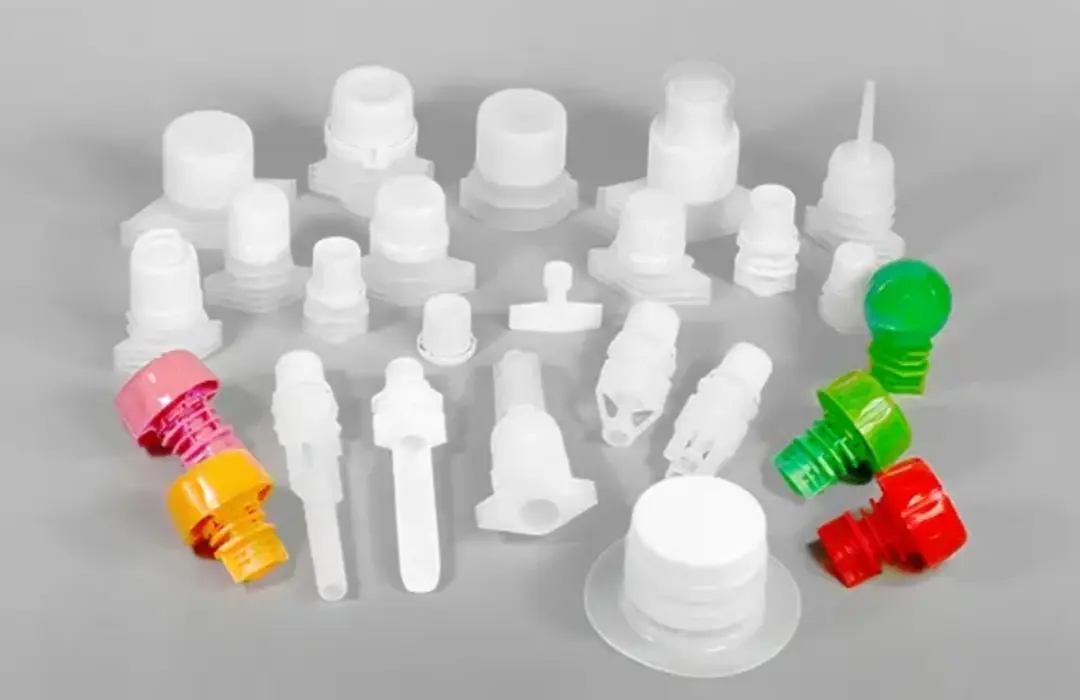
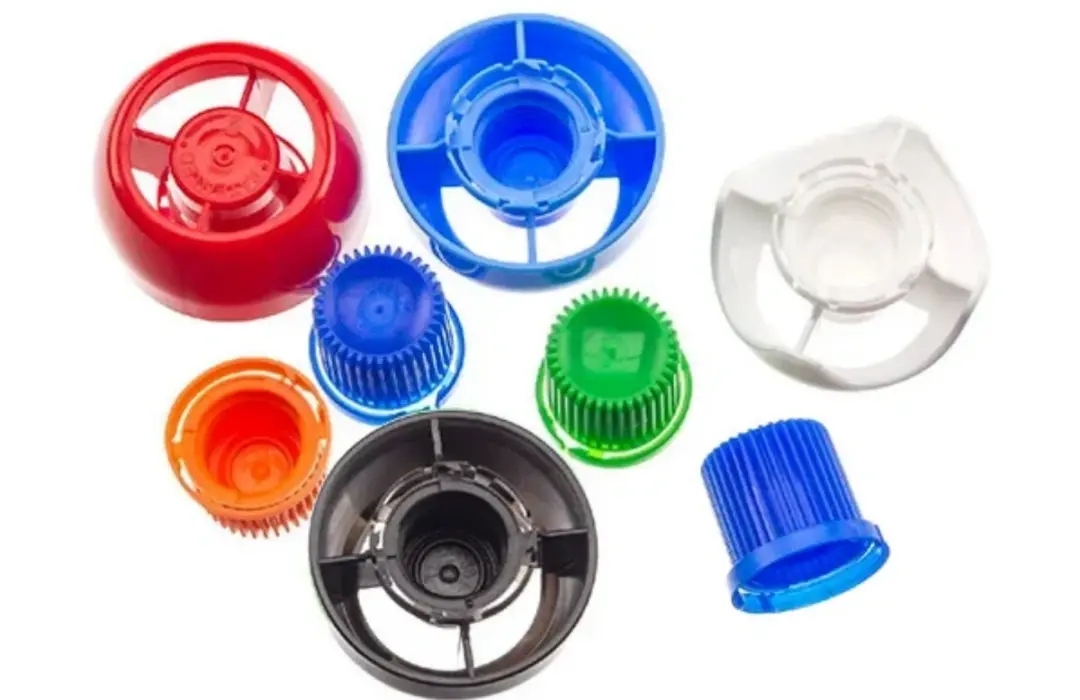
When selecting a spout size, beverage brands should look beyond just the diameter and consider three key questions:
- Product Compatibility: Is the spout suitable for the beverage’s viscosity and the characteristics of any particles it may contain?
- Consumer Experience: Can consumers drink from it easily? Is the spout convenient to open and reseal?
- Production Compatibility: Is the spout compatible with existing filling equipment and packaging production processes?
These factors collectively determine whether a specific spout size is appropriate for a given beverage packaging project.
How to Select Spout Size for Different Beverage Products
Because flow characteristics vary significantly across different types of beverages, it is not advisable to use the same spout specification for every product.
During the product development phase, brands should first establish a general direction for spout selection based on the type of beverage.
1. Clear Juice and Water-Based Drinks
Clear fruit juices, tea-based drinks, and other low-viscosity beverages generally offer good flow, placing relatively simple demands on the spout channel.
When selecting a spout size for these types of products, key considerations include:
- The desired flow rate during consumption. – Whether the spout is suitable for direct consumption.
- The ease of opening and resealing the cap.
- How well the spout size aligns with the overall design of the packaging.
For small-volume, ready-to-drink beverages, an excessively large spout does not necessarily provide a better experience. Brands should select an appropriate opening based on the consumption habits of their target audience.
2. Juice with Fruit Pulp
Unlike clear, pulp-free juices, beverages containing fruit pulp require consideration not only of liquid viscosity but also of the size and shape of the pulp particles.
If the internal channel of the spout cannot accommodate the particles, it may lead to clogging, inconsistent flow, or the need for consumers to repeatedly squeeze the packaging.
When selecting a spout, consider the following:
- Maximum size of the fruit pulp particles.
- Shape and concentration of the pulp.
- Actual internal diameter of the spout.
- Changes in the beverage’s flow characteristics at different temperatures.
For products containing larger pulp particles, it is advisable to conduct flow tests using the actual beverage rather than relying solely on liquid viscosity to determine the appropriate spout specifications.
3. Sports and Functional Drinks
Sports and functional drinks typically emphasize portability, rapid consumption, and the ability to be used with one hand.
For these types of products, the spout design must balance flow rate with consumer convenience.
على سبيل المثال:
- Products intended for activities like running or cycling should prioritize a fast flow rate.
- Products for outdoor sports must account for overall packaging portability.
- For functional concentrated beverages, the flow channel should be determined based on the product’s actual viscosity.
If a product is primarily targeted at sports or active use, it is also important to consider the force required to open the cap, the effectiveness of resealing, and leak-proof performance during transport.
4. Yogurt Drinks and Smoothies
Yogurt drinks, smoothies, and blended fruit-and-vegetable drinks are generally thicker than standard juices.
For these products, special attention must be paid to how well the spout’s internal diameter matches the product’s flow characteristics.
If the spout is too narrow, consumers may need to apply significant pressure to achieve a steady flow; furthermore, if the product contains fruit fibers or other particles, it is essential to verify that the channel is not prone to clogging. For this type of beverage, it is recommended to conduct actual product testing before finalizing the spout size, with a focus on evaluating the following:
- Whether the liquid flows continuously.
- Whether the flow rate is easy to control when the package is squeezed.
- Whether there is any risk of clogging due to solid particles.
- Whether the package remains sealed after normal use.



5. Fruit Puree and Thick Beverages
Fruit purees, concentrated juices, and other high-viscosity beverages often impose more complex requirements on the spout.
Beyond the dimensions of the internal channel, one must also consider the product’s rheological properties, the nature of any solid particles, and how consumers typically squeeze the packaging.
For such products, it is advisable for brands to collaborate with packaging manufacturers to determine the appropriate spout inner diameter, packaging structure, and intended usage method, finalizing the design through sample testing.
Spout Inner Diameter vs. Outer Diameter: What Should Buyers Check?
When communicating with flexible packaging suppliers, buyers often confuse the spout’s inner diameter, outer diameter, and cap interface dimensions.
In reality, these measurements refer to distinct structural parameters and cannot be used interchangeably.
Understanding the Main Spout Dimensions
| Dimension | Meaning | Why It Matters |
|---|---|---|
| Inner Diameter (ID) | The diameter of the internal channel | Affects the product’s flow capacity |
| Outer Diameter (OD) | The external diameter of the spout | Relates to the overall structure and component compatibility |
| Thread / Cap Interface | The threading and cap connection area | Determines whether the cap can be fitted correctly |
| Spout Base | The base of the spout and the connection zone | Relates to how the spout is attached to the pouch |
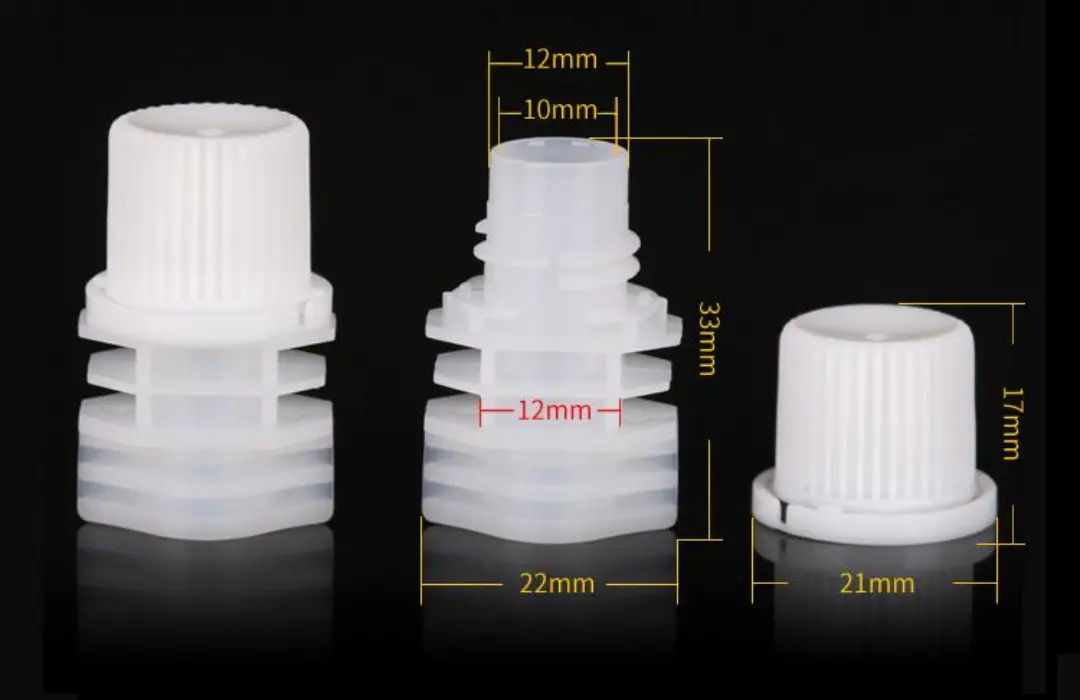
إن Inner Diameter (ID) represents the actual size of the internal channel through which the beverage passes; it is therefore the critical factor when assessing flow capacity.
إن Outer Diameter (OD) pertains to the external structure and the compatibility of components; it cannot be used as a proxy for the inner diameter when evaluating how the product flows.
Furthermore, the cap interface involves specific thread specifications, mating dimensions, and sealing mechanisms.
When requesting a quote, buyers should ask the supplier for technical drawings of the spout that clearly specify the inner diameter, outer diameter, and interface dimensions. This helps prevent mismatches in samples that might otherwise arise from differing interpretations of these dimensions. ## How Spout Size Affects Beverage Filling and Packaging Performance
Spouts serve not only the consumer but must also meet the requirements of the packaging production process.
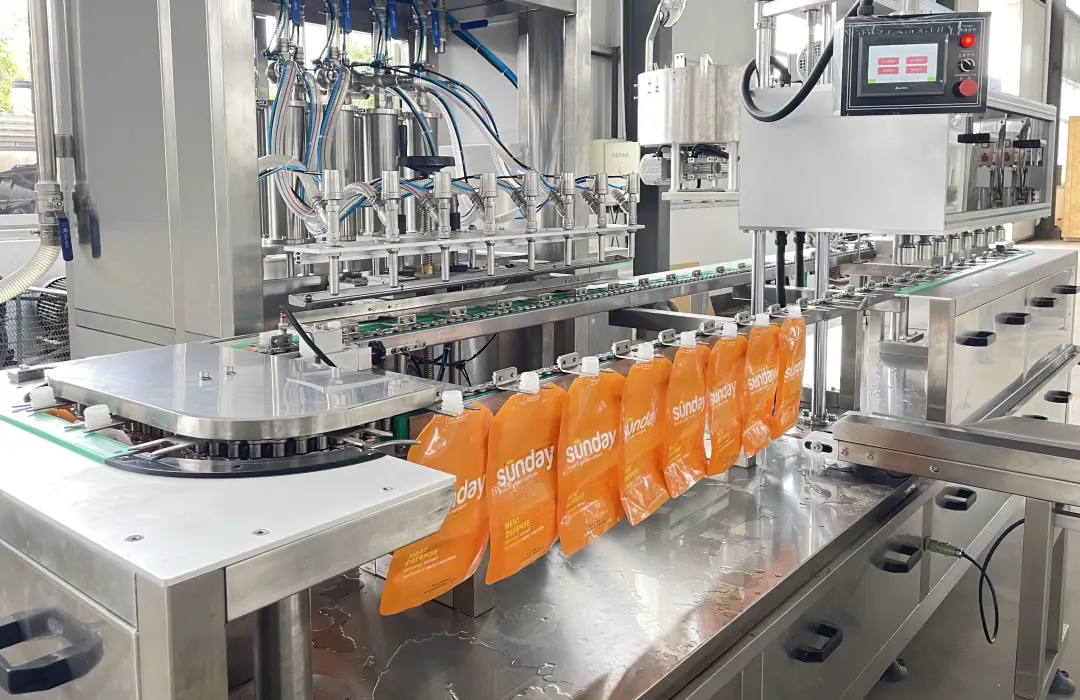
For beverage manufacturers using automated filling equipment, in particular, the specifications of the spout must be compatible with the filling system.
Filling Equipment Compatibility
Different filling machines may utilize specific filling nozzles and positioning mechanisms.
Purchasers should verify the following:
- Whether there is sufficient clearance between the outer diameter of the filling nozzle and the inner diameter of the spout.
- Whether the spout’s positioning is compatible with the equipment’s alignment system.
- Whether there is a risk of liquid splashing or backflow during the filling process.
- Whether the equipment supports the specific spout design and filling method being used.
It is important to note that a spout size ideal for consumer use may not necessarily be the best choice for the production line.
Filling Method and Product Characteristics
The method used to fill the beverage also influences the packaging solution.
For instance, cold filling, hot filling, and aseptic filling may impose different requirements on packaging materials, equipment, and production processes.
Therefore, when selecting a spout, brands should provide the packaging manufacturer with details regarding the filling method, product temperature, and relevant process conditions.
Simply specifying a spout diameter is not enough to ensure that the packaging meets all production requirements.
Sealing and Leakage Prevention
The connection area between the spout and the pouch body is a critical point in beverage packaging.
If the spout specifications or the base structure are incompatible with the composite film—or if the sealing process is not properly controlled—the integrity of the package seal may be compromised.
For beverage packaging intended for consumption by squeezing, long-distance transport, or repeated opening, it is advisable to conduct simulated tests covering filling, sealing, squeezing, and transportation.
What Information Should You Provide When Ordering Custom Beverage Spout Pouches?
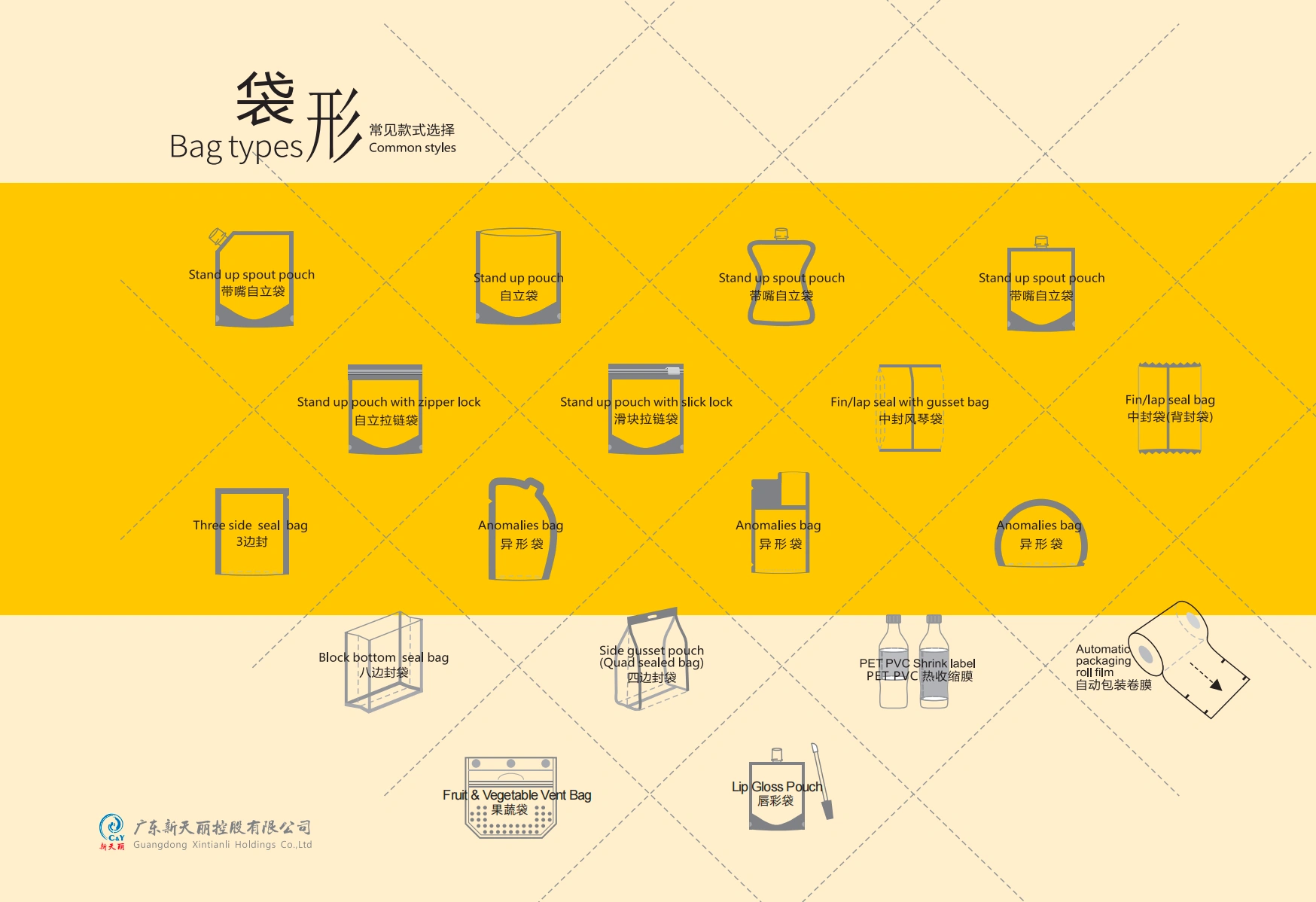
For brands seeking custom-made spout pouches, providing accurate product information is far more effective than merely asking for a specific spout size.
Before contacting a manufacturer, consider preparing the following six categories of information:
1. Beverage Type
Clearly specify whether the product is a fruit juice, sports drink, tea-based beverage, yogurt, milkshake, or fruit purée. Different products exhibit varying flow characteristics, requiring specific approaches to selecting the appropriate spout.
2. Product Viscosity and Particle Size
Specify the viscosity of the beverage, as well as whether it contains fruit pulp, fibers, or other solid particles.
If the product contains particles, it is best to provide the maximum particle size so that the suitability of the spout’s internal channel can be evaluated.
3. Pouch Capacity and Dimensions
Define the target packaging capacity—for example, 200ml, 250ml, 500ml, or other specifications.
Packaging capacity influences not only the dimensions of the pouch itself but also the placement of the spout, the overall pouch structure, and the ease with which a consumer can hold the package.
4. Filling Method
Inform the supplier whether the filling process is manual or automated, and specify whether it involves hot filling, cold filling, or aseptic filling.
If filling equipment is already in place, it is advisable to provide the dimensions of the filling heads and any relevant technical requirements.
5. Spout and Cap Requirements
If your brand has already specified a particular spout size, you may provide dimension drawings or physical samples.
If the specifications have not yet been determined, you can provide details regarding the product’s formulation and intended usage scenarios; the manufacturer can then assist in evaluating the most suitable spout and cap combination.
6. Target Market and Packaging Design
Consumers in different markets may have varying preferences regarding the appearance of the packaging, the method of consumption, and overall convenience.
Brands should clarify their target market, brand positioning, packaging design, and intended sales channels in advance to ensure the selection of the most appropriate packaging solution.
FAQ About Beverage Pouch Spout Size
1. What is the standard spout size for juice pouches?
There is no single, universal standard size for beverage spouts used in juice packaging. The specific dimensions must be determined based on factors such as the viscosity of the juice, the presence of pulp or particles, the total volume of the package, and the intended method of consumption.
2. Does a larger spout improve beverage flow?
Not necessarily. While a larger internal channel may reduce flow resistance for certain products, the actual dispensing performance also depends on the beverage’s viscosity, particle size, the structure of the pouch, and how the pouch is squeezed. This should be verified through actual product testing. ### 3. Can I customize the spout size for my beverage pouch?
Yes, spout specifications can be customized based on your project requirements. To determine the appropriate options and compatible caps, you will need to provide the manufacturer with details regarding the type of beverage, packaging capacity, filling method, and intended use case.
4. How do I choose a spout for beverages containing fruit pulp?
For beverages with fruit pulp, it is crucial to ensure that the inner diameter of the spout is compatible with the size of the largest pulp particles. You should also test the actual dispensing performance to prevent the pulp from causing clogs. Relying solely on the viscosity of the beverage to select a spout is not sufficient.
5. Should I test the spout before mass production?
Sample testing is highly recommended. By conducting trials—including actual filling, dispensing, cap fitting, sealing, and simulated transport—you can identify potential compatibility issues between the spout, the product, your equipment, and the packaging structure, thereby reducing risks during mass production.
Develop Custom Beverage Spout Pouches with Stanley Package
Choosing the right Spout Size is essential, but your pouch structure, material selection, and filling requirements also matter.
تأسست عام 1998, باقة ستانلي is a professional مُصنِّع العبوات المرنة المخصصة specializing in customized packaging pouches and roll stock packaging film. With advanced printing and lamination equipment, we provide flexible packaging solutions tailored to different beverage products and brand requirements.
تبحث عن شخص موثوق به custom spout pouch manufacturer? Share your beverage type, pouch capacity, and packaging requirements with Stanley Package. Let’s develop the right packaging solution for your brand.