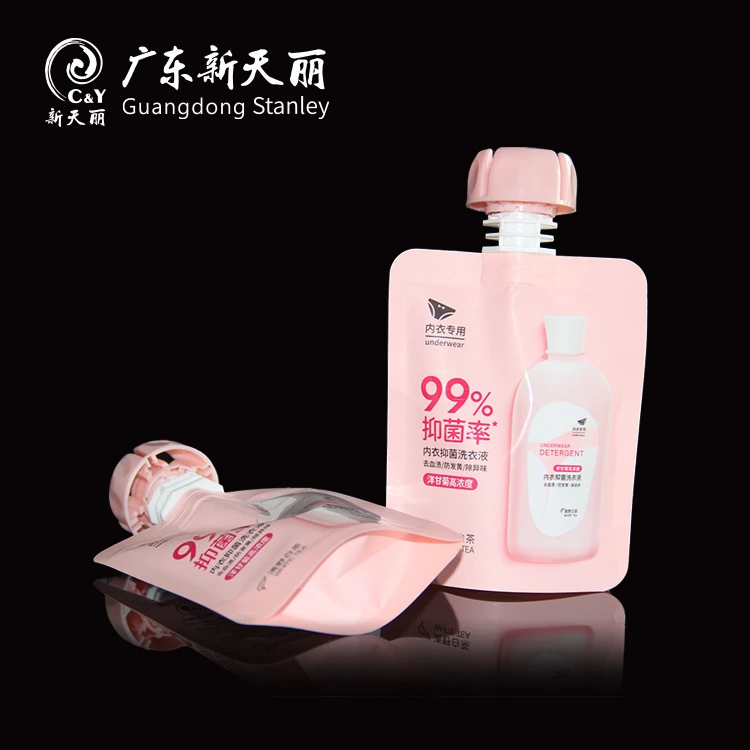
Flexible pet food packaging and rigid packaging serve different product, production, logistics, and retail requirements.
Flexible formats such as stand-up pouches, flat bottom bags, gusset bags, retort pouches, and roll stock film can reduce package weight, enable efficient storage, offer large printable surfaces, and provide multiple functional options. Rigid formats such as cans, tubs, trays, and containers can provide strong physical protection and may suit specific filling or processing systems.
For pet food brands, the right decision depends on the product—not simply which packaging format is more modern.
Flexible vs Rigid Pet Food Packaging: What Are the Main Differences?
Buyers can start by comparing the two packaging systems across the factors that directly affect purchasing and operations.
| 系数 | 柔性包装 | Rigid Packaging |
|---|---|---|
| Package Weight | Generally lighter | Generally heavier |
| Empty Packaging Storage | Compact | 需要更多空间 |
| Transportation Efficiency | 高 | Lower due to rigid volume |
| Printable Surface | 大 | Depends on container and label |
| Resealable Options | Zippers, spouts | Lids and caps |
| Format Flexibility | Many pouch structures | Fixed container structures |
| Physical Rigidity | 较低 | 更高 |
| Retail Presentation | Highly customizable | Strong structural appearance |
| Filling Compatibility | Requires suitable pouch/film equipment | Requires suitable rigid filling line |
| Product Applications | Dry, treats, wet and semi-liquid formats | Cans, tubs, trays and similar products |
The final selection should account for the entire packaging and production system.
What Are the Main Advantages of Flexible Pet Food Packaging?
Lower Packaging Weight
Flexible pouches typically use less packaging material by weight than many rigid containers.
For businesses shipping large quantities of pet food, package weight can influence transportation, warehouse handling, and overall logistics efficiency.
Efficient Storage Before Filling
Unfilled pouches and roll stock store more compactly than preformed rigid containers.
This can be valuable for factories managing multiple products, packaging sizes, or seasonal production schedules.
Large Branding Surface
Flexible packaging provides a broad printable area for:
- Brand graphics
- Product photography
- Flavor or recipe identification
- Feeding information
- Nutritional information
- Barcodes
- Regulatory information
Custom printing also allows brands to build a consistent visual system across multiple pet food categories.
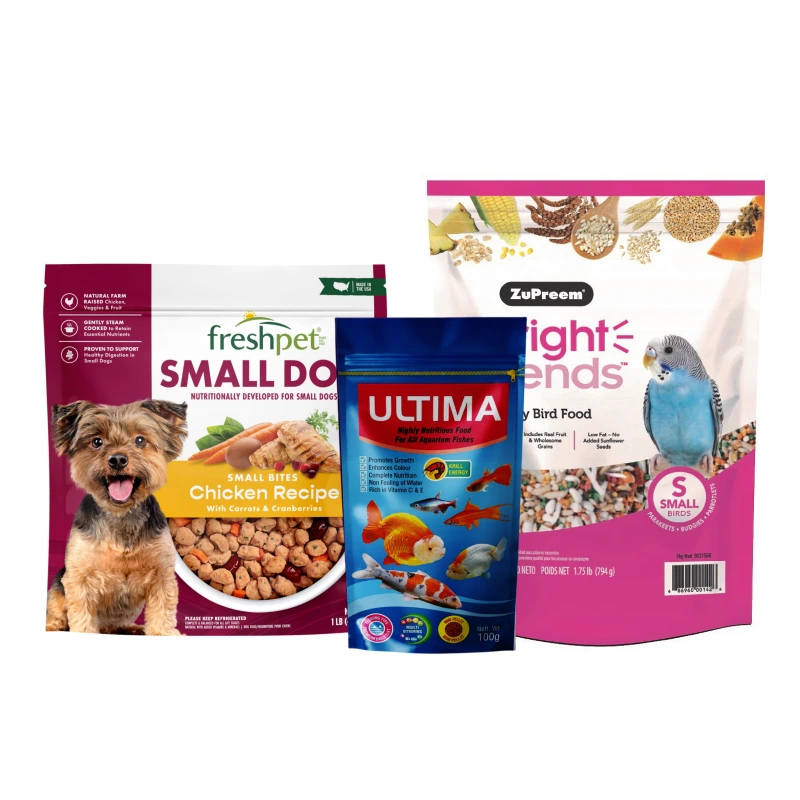
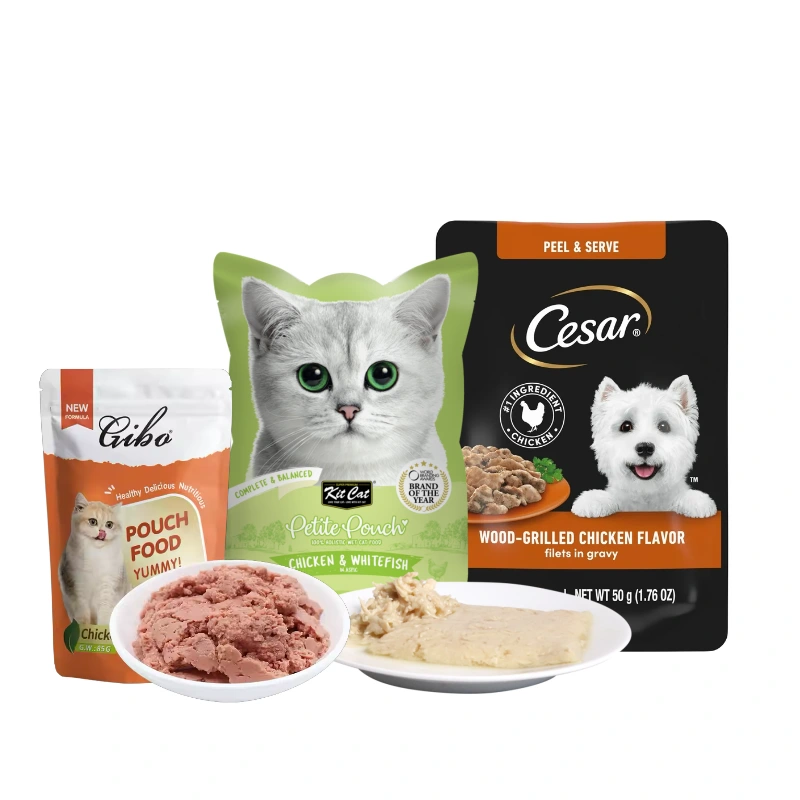
Multiple Functional Formats
Flexible pet food packaging is not limited to a conventional bag.
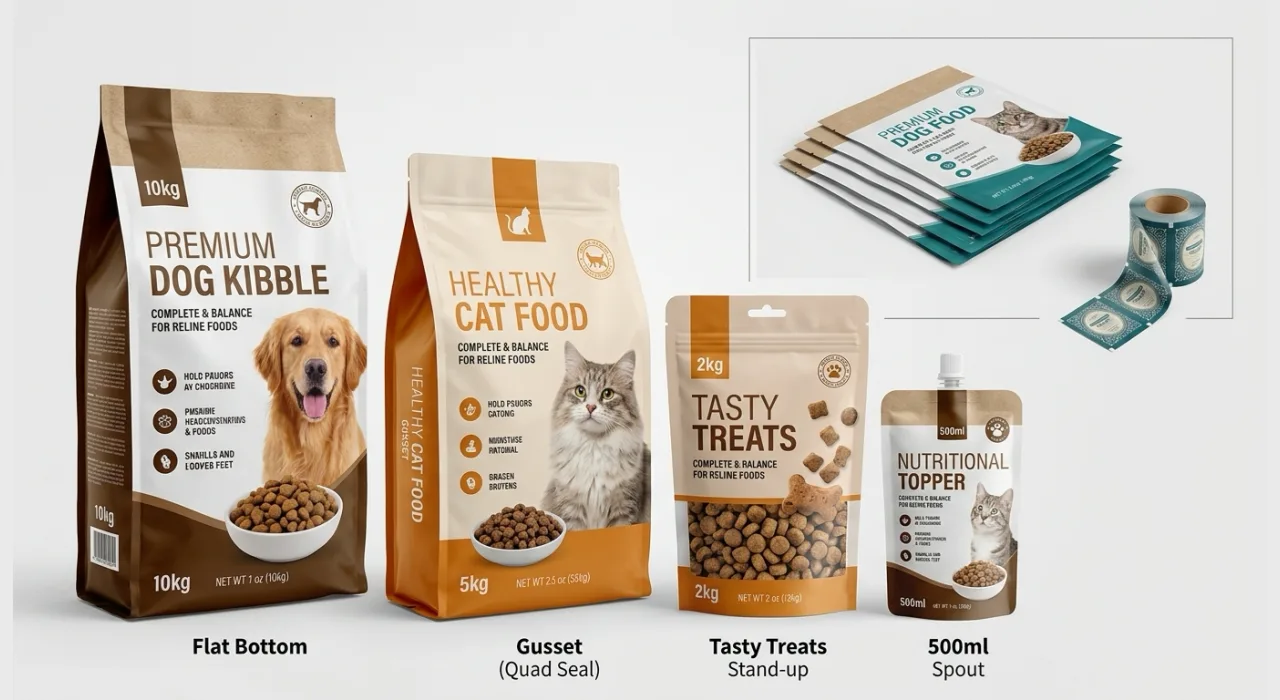
Depending on the product, buyers can consider:
- 立式袋
- Flat bottom pouches
- Side gusset bags
- 无菌袋
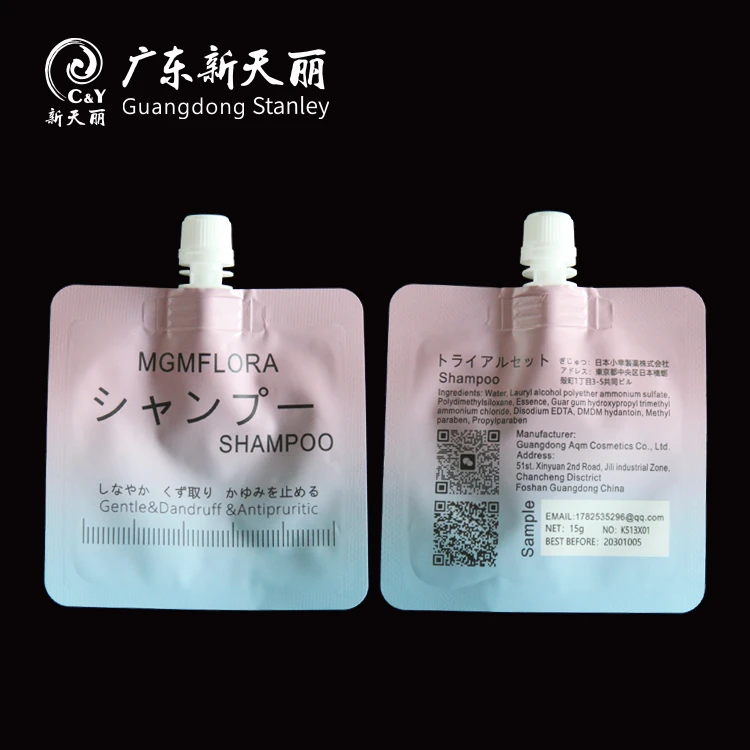
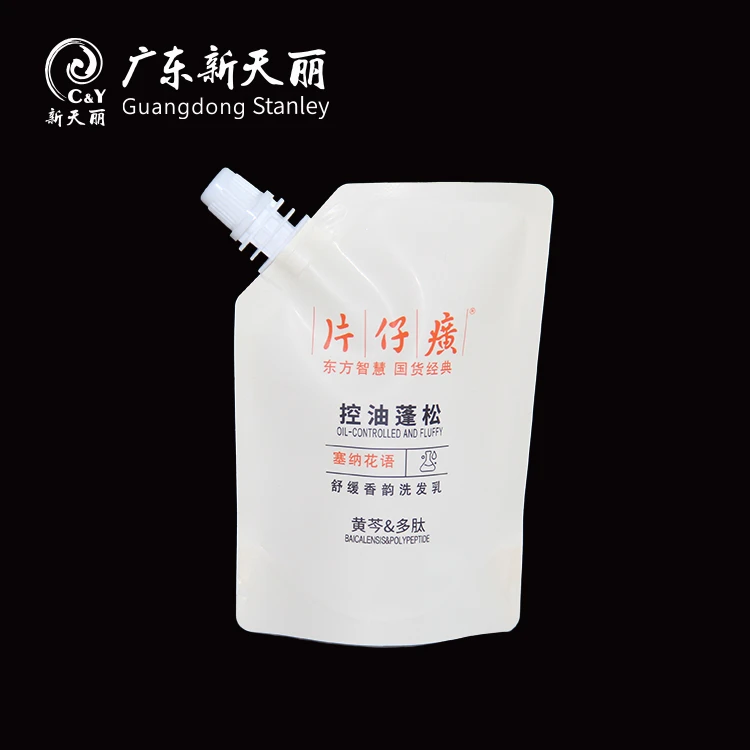
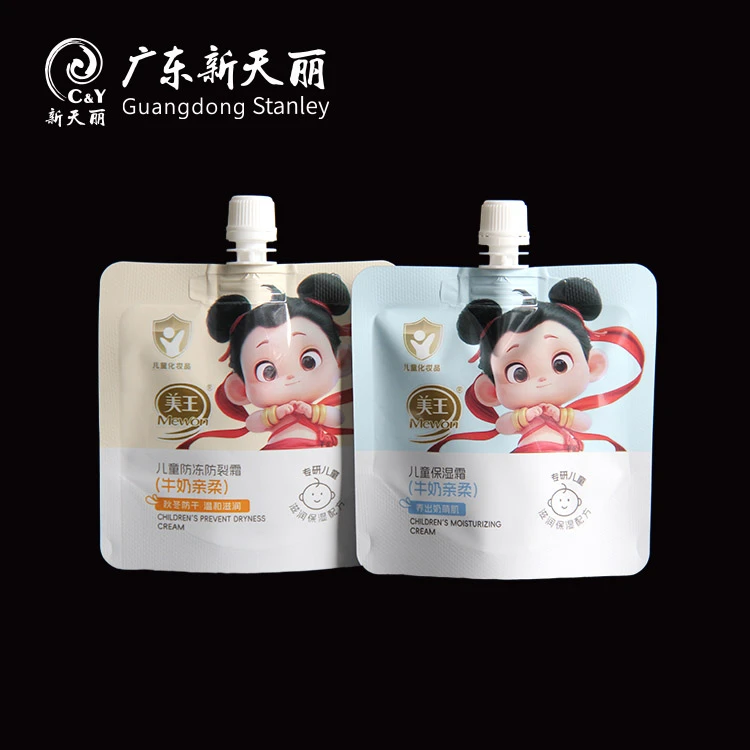
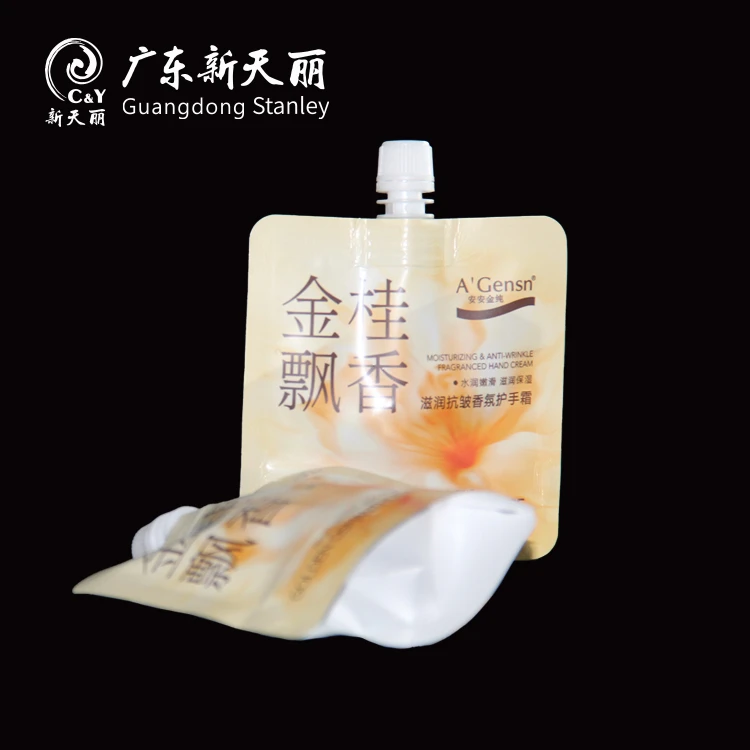
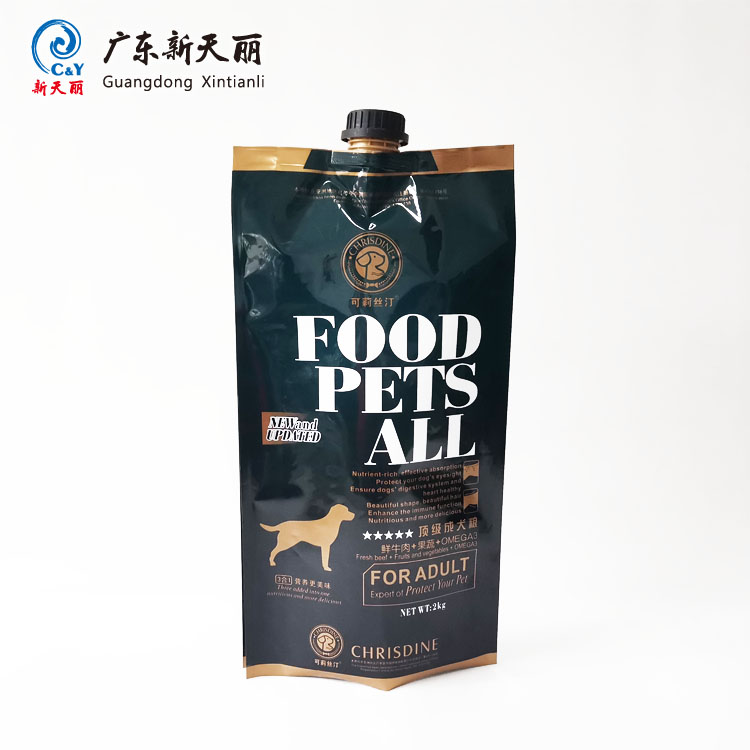
- Spout pouches
- Roll stock packaging film
This allows packaging to be developed around the product and filling process rather than forcing every product into one container format.
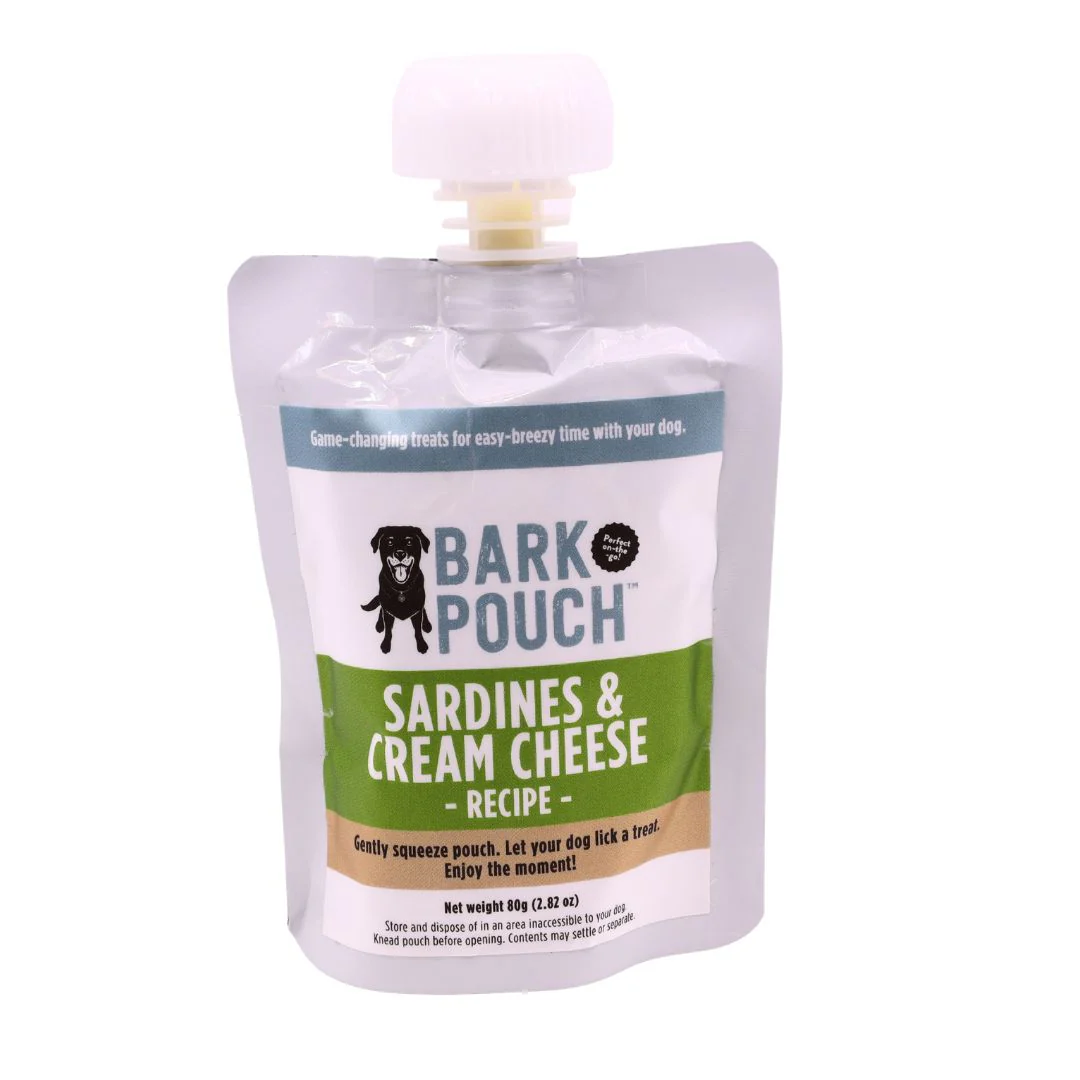
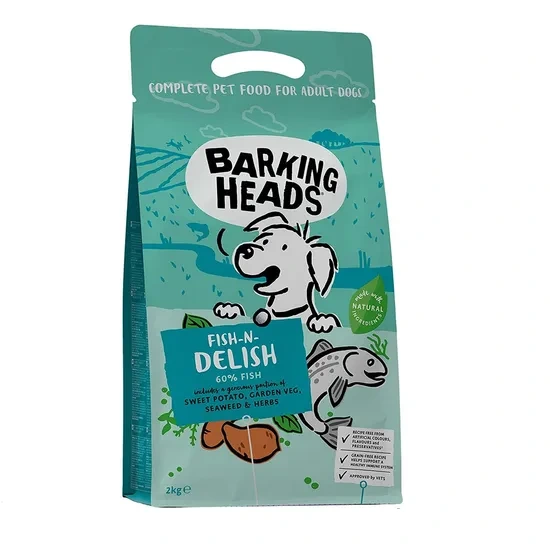
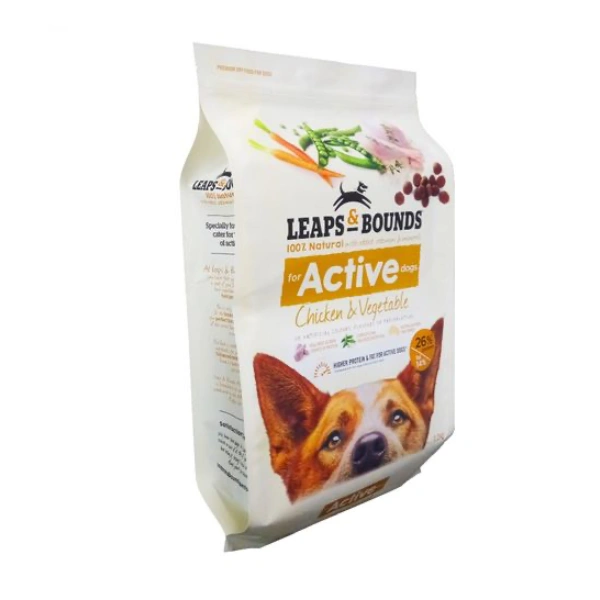
When Does Rigid Packaging Still Make Sense?
Flexible packaging is not the correct choice for every application.
Rigid packaging may remain appropriate when:
- Strong structural protection is a priority.
- Existing production equipment is designed around cans, trays, or containers.
- The product format requires a particular rigid package.
- Brand positioning depends on a specific container format.
- Distribution conditions make structural rigidity particularly important.
Changing packaging formats can also require modifications to filling equipment, sealing processes, secondary packaging, and production workflows.
Brands should therefore evaluate the total conversion cost rather than comparing the packaging unit price alone.
How Does Flexible Packaging Affect Shipping and Storage?
For B2B buyers, logistics can be an important reason to evaluate flexible packaging.
Empty flexible packages take up relatively little warehouse space and can generally be packed efficiently for transportation to the filling facility.
Finished flexible packages can also offer efficient carton utilization depending on pouch shape and product type.
For companies sourcing packaging internationally, buyers should evaluate:
- Quantity per carton
- Carton dimensions
- Total shipment volume
- Packaging storage space
- Finished-product packing efficiency
- Pallet configuration
These factors can affect the real landed cost of a packaging system.
Which Flexible Packaging Format Fits Different Pet Food Categories?
Rather than selecting one pouch for every product, brands can build a packaging system around several formats.
| Product Category | Flexible Packaging Direction |
|---|---|
| 宠物干粮 | Flat bottom or gusset pouch |
| 宠物食品 | Stand-up or resealable pouch |
| Freeze-Dried Food | High-barrier resealable pouch |
| 湿宠物食品 | Retort pouch where appropriate |
| Sauces / Toppers | Spout pouch where appropriate |
| Automated Packing | Roll stock packaging film |
The final structure should be determined according to product characteristics, processing conditions, filling equipment, shelf-life requirements, and distribution environment.
What Should Brands Consider Before Switching to Flexible Packaging?
Switching from rigid to 软包装 should be treated as a packaging project rather than simply a material change.
产品兼容性
Confirm the required barrier, heat resistance, puncture resistance, seal performance, and other product-specific requirements.
灌装设备
Determine whether existing machinery can handle the selected pouch or roll stock format.
A packaging format that cannot integrate efficiently with the filling line can create unnecessary production costs.
Package Size
Pouch dimensions should be developed around fill weight, product density, headspace, shelf presentation, and carton packing—not simply copied from a competitor.
Retail Requirements
Consider how the package will stand, hang, stack, display, open, and reclose in the target retail environment.
SKU Planning
If several products share similar requirements, standardized pouch sizes may simplify purchasing while custom artwork differentiates individual SKUs.
What Should You Ask a Flexible Pet Food Packaging Manufacturer?
Before selecting a supplier, procurement teams should go beyond asking for the lowest unit price.
Useful questions include:
- Can the manufacturer recommend structures based on the product and processing conditions?
- Which pouch formats can be produced?
- What printing capabilities are available?
- Can multiple sizes and SKUs be managed?
- What quality-control procedures are used?
- Can the supplier support repeat orders with consistent specifications?
- What information is required before sampling or quotation?
- Can roll stock film and pre-made pouches both be supplied?
These questions help buyers evaluate whether a supplier can support an ongoing packaging program rather than only a single purchase order.
Is Flexible Pet Food Packaging Right for Your Brand?
Flexible packaging is particularly worth considering when a pet food brand wants lighter packaging, efficient storage, strong shelf branding, multiple pouch formats, or a packaging system that can support different product categories.
Rigid packaging can remain appropriate where structural strength, existing filling systems, or specific product requirements make it the more practical format.
For B2B buyers, the decision should therefore be based on product compatibility, production efficiency, logistics, retail requirements, and long-term sourcing needs.
Work With Stanley Package for Flexible Pet Food Packaging
成立于 1998 年、 Stanley Package is a Custom Flexible Packaging Manufacturer with a 15,000㎡ production facility, advanced printing and lamination equipment, and strict quality management.
We supply custom packaging pouches and roll stock packaging film to brands and B2B buyers worldwide.
Planning a flexible pet food packaging project? 联系斯坦利包装公司 with your product, packaging format, size, printing, and quantity requirements to discuss your project and request a quotation.