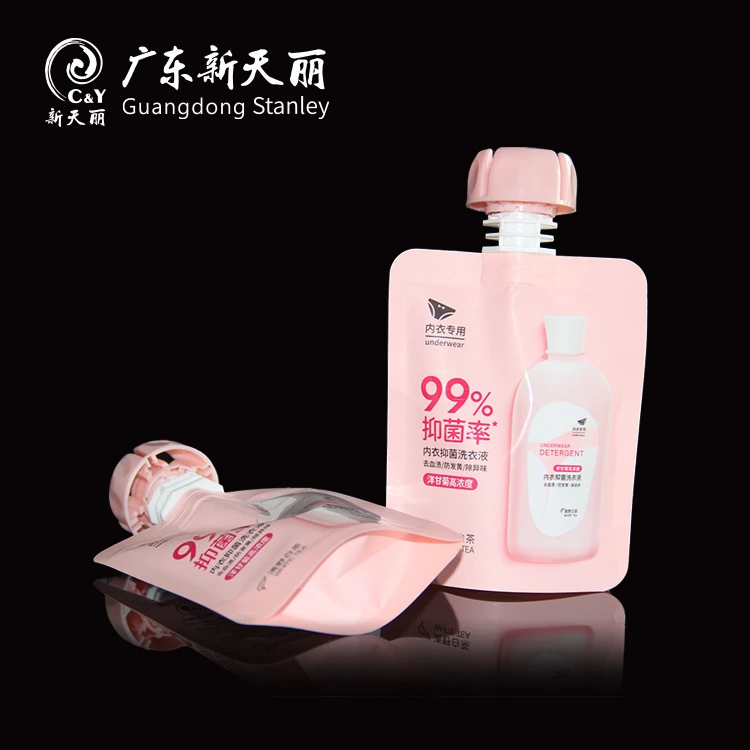
Die richtige Wahl treffen coffee packaging material is critical for protecting roasted coffee from oxygen, moisture, light, and aroma loss. For coffee roasters, importers, private-label brands, and distributors, material selection affects not only shelf life but also packaging performance, printing quality, appearance, and overall product positioning.
However, PET, PE, aluminum foil, and kraft paper do not serve exactly the same purpose. In most commercial coffee pouches, these materials are combined into a multi-layer structure rather than used individually. Understanding the role of each material can help buyers choose the right packaging structure for their coffee products.
What Should Coffee Packaging Materials Protect Against?
Roasted coffee is sensitive to several environmental factors. Oxygen can accelerate oxidation and cause flavor and aroma deterioration, while moisture can affect coffee quality and texture. Light can also contribute to degradation, particularly when coffee is exposed for extended periods.
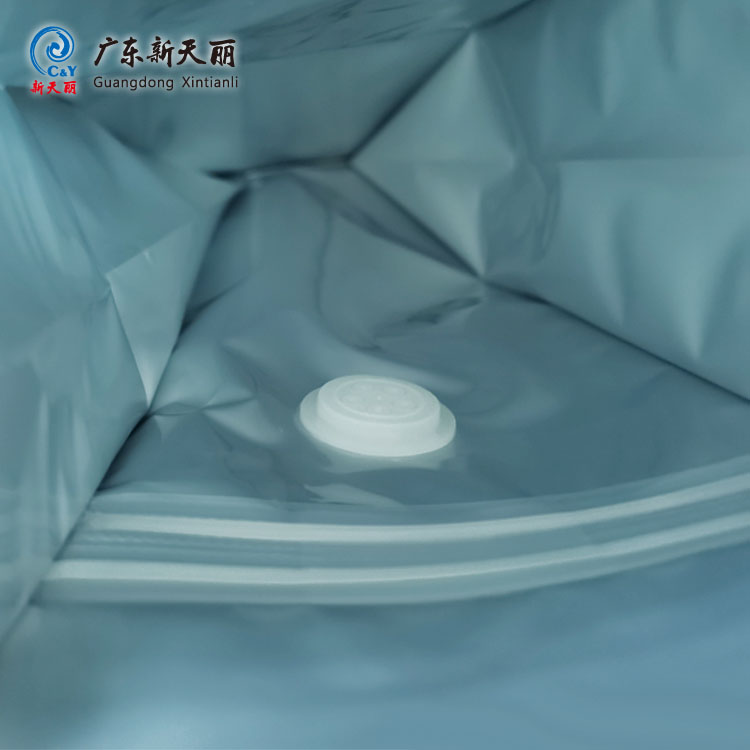
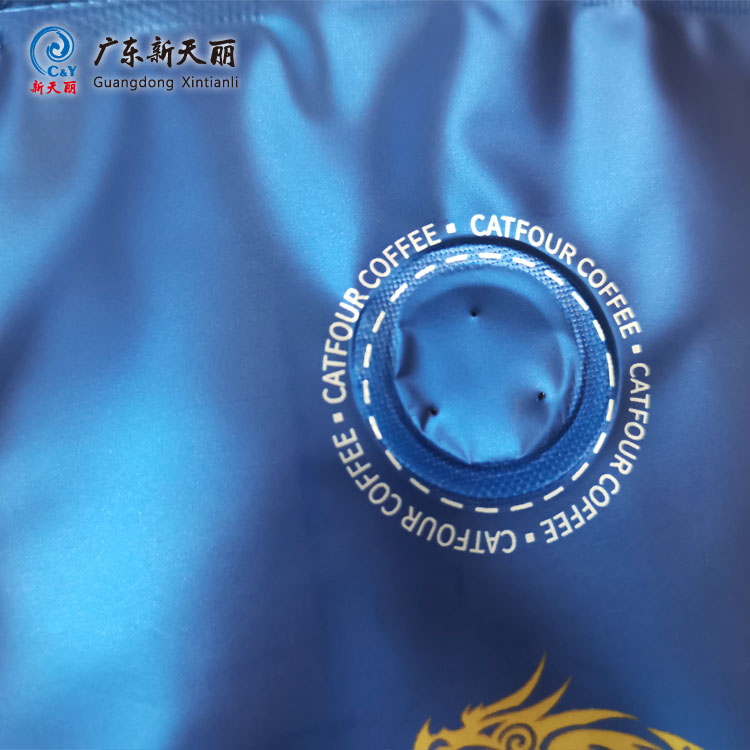
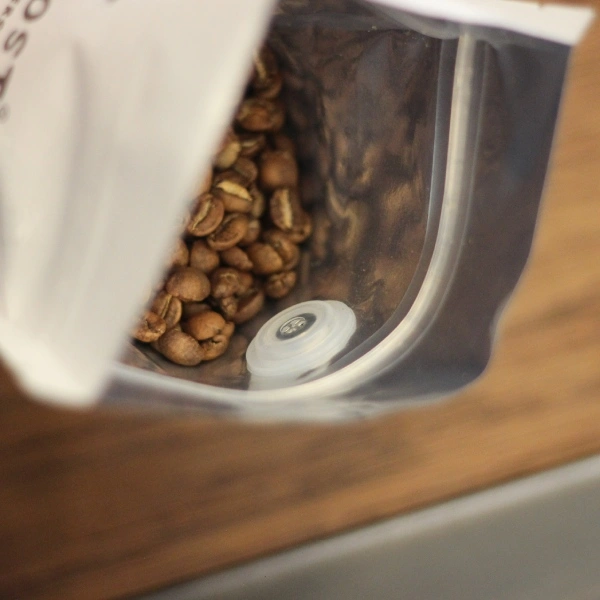
Coffee also releases carbon dioxide after roasting. For this reason, many coffee pouches use a one-way degassing valve that lets CO₂ escape while preventing outside air from entering the package.
For B2B buyers, the ideal packaging structure should therefore balance:
- Oxygen and moisture barrier performance
- Protection from light
- Heat-sealing strength
- Puncture and handling resistance
- Printing and branding requirements
- Shelf-life expectations
- Filling and packaging equipment compatibility
- Sustainability and market requirements
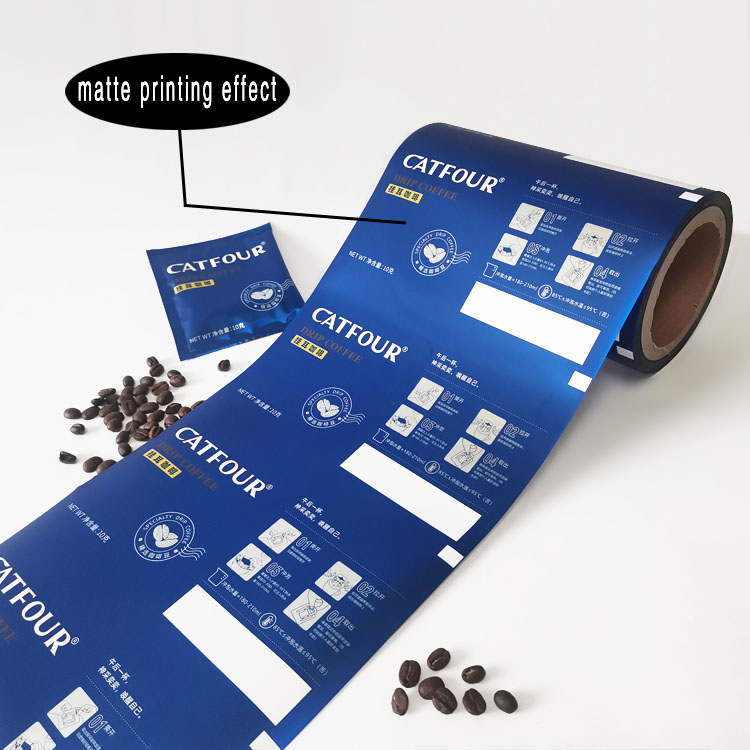
PET: A Strong and Printable Outer Layer
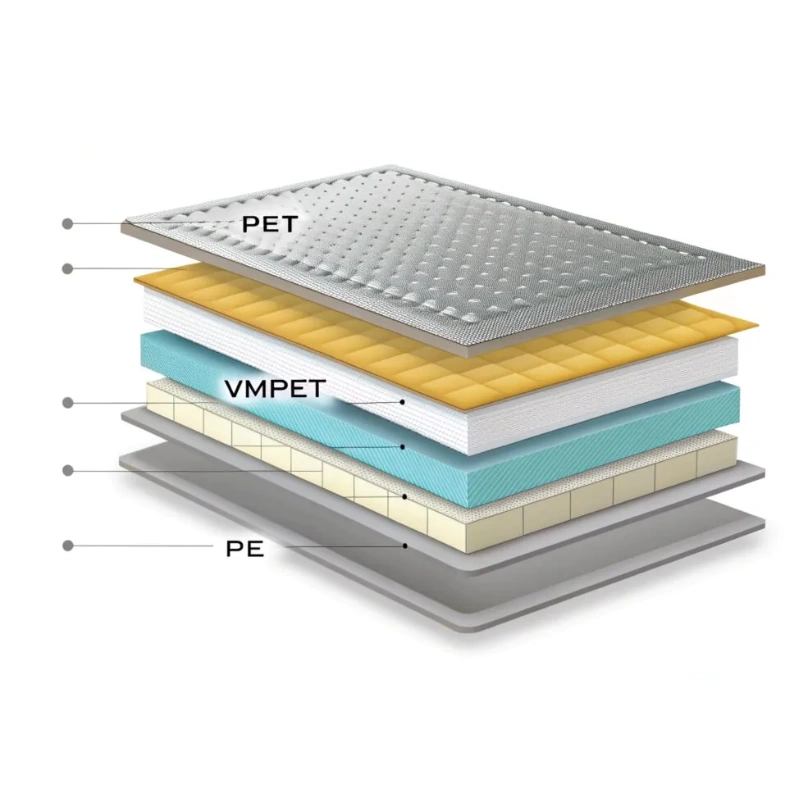
PET, or polyethylene terephthalate, is commonly used as an outer layer in laminated coffee packaging.
One major advantage is its mechanical strength. PET provides good dimensional stability and helps the pouch withstand handling, transportation, and stacking. It also offers a smooth surface that is well suited to high-quality printing, making it useful for coffee brands that rely heavily on packaging graphics.
PET is not normally selected alone as the primary barrier layer for demanding coffee applications. Instead, it is combined with materials such as aluminum foil, metallized films, or PE to create a complete packaging structure.
For brands looking for detailed graphics, premium finishes, or consistent packaging appearance, PET can be an effective outer layer.

PE: The Heat-Sealable Inner Layer
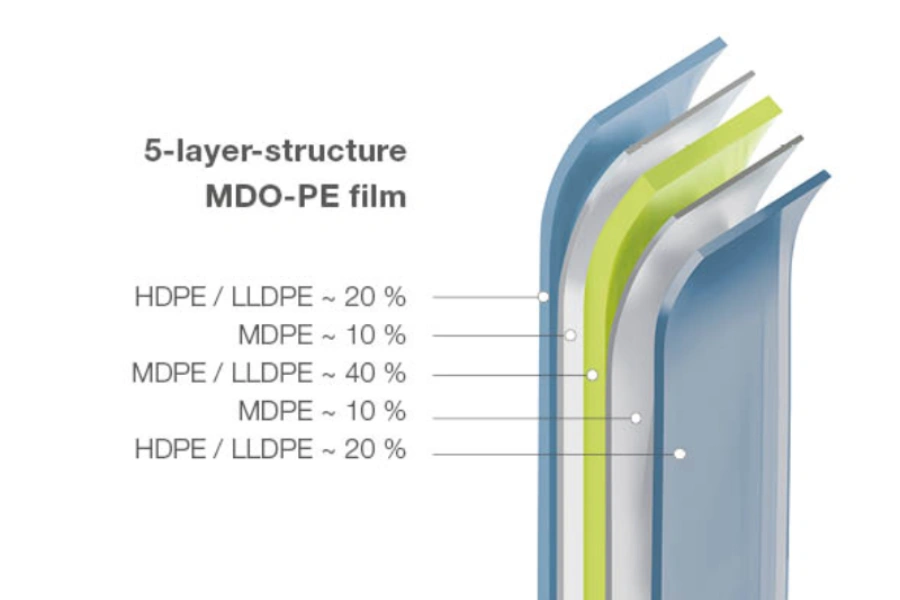
PE, or polyethylene, is widely used as the inner layer of flexible coffee packaging because of its excellent heat-sealing properties.
The PE layer forms the part of the pouch that comes into contact with the coffee and helps create strong, reliable seals. Good sealing is essential because even a high-barrier material structure can perform poorly if the finished pouch has weak or inconsistent seals.
PE also provides flexibility and helps protect the package during filling and transportation.
For this reason, PE is frequently combined with PET, aluminum foil, metallized films, or paper in laminated coffee packaging structures.

Aluminum Foil: Maximum Barrier Protection
Aluminum foil is one of the most effective barrier materials available for coffee packaging. It provides strong protection against oxygen, moisture, and light, making it suitable for applications where maintaining coffee freshness over an extended distribution period is a priority.
A common high-barrier structure is PET/AL/PE. In this construction:
- PET provides strength and a printable outer surface.
- Alufolie provides a strong barrier against light, oxygen, and moisture.
- PE provides heat sealing and the food-contact layer.
This type of structure is particularly suitable for roasted coffee that requires strong barrier protection and extended shelf-life performance.
The main trade-off is that aluminum foil-based structures are more complex than simple plastic structures and may not fit every brand’s sustainability strategy or packaging requirement.

Kraft Paper: Natural Appearance and Brand Positioning
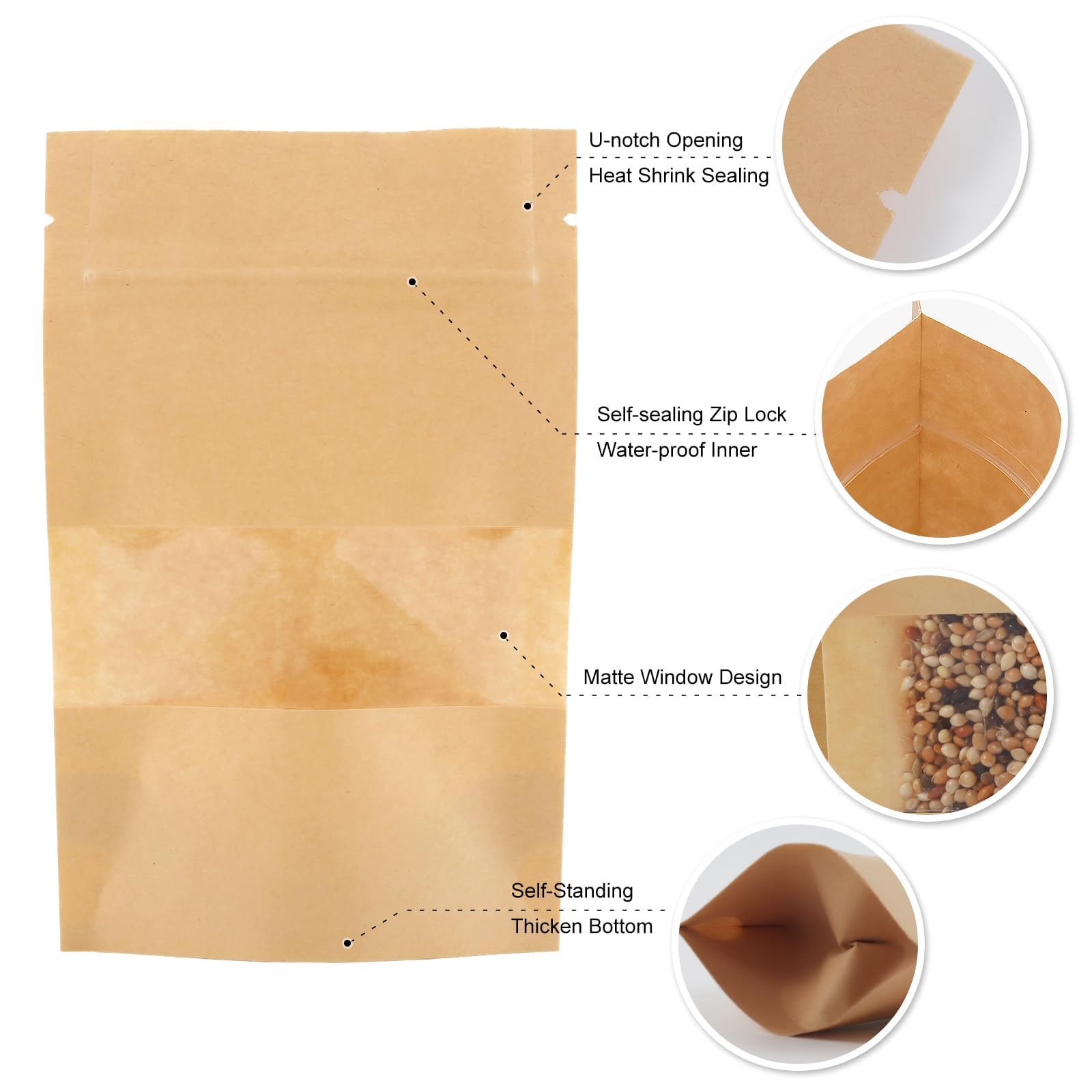
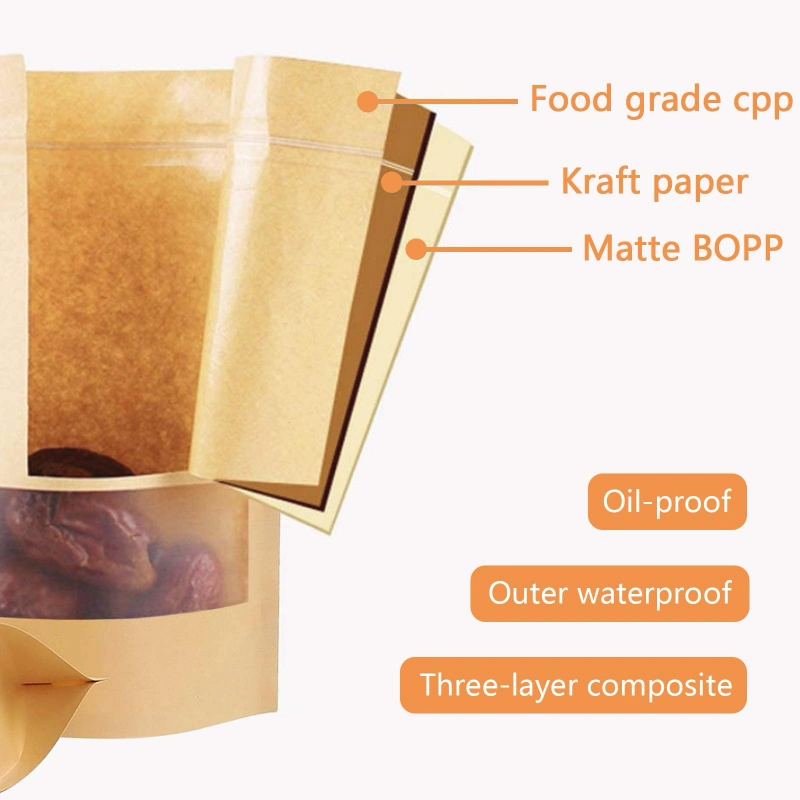
Kraft paper is increasingly used in coffee packaging because of its natural, premium appearance. It can help specialty coffee brands communicate an artisanal, organic, or environmentally conscious brand image.
However, kraft paper alone does not provide the barrier performance normally required for commercial roasted coffee packaging. It is therefore commonly laminated with barrier films or aluminum foil and a heat-sealable inner layer.
For example, a kraft-based coffee pouch may combine a kraft paper outer layer with a high-barrier inner structure. This allows brands to achieve the visual appeal of paper while maintaining the functional protection required for coffee.
For specialty roasters and private-label brands, kraft-based packaging can be an effective choice when shelf appearance is as important as barrier performance.
PET vs. PE vs. Aluminum Foil vs. Kraft Paper
| Material | Main Role | Key Advantage | Typical Application |
|---|---|---|---|
| PET | Outer layer | Strength and printability | Custom printed coffee pouches |
| PE | Inner layer | Heat sealing and flexibility | Food-contact and sealing layer |
| Alufolie | Barrier layer | Excellent light, oxygen and moisture barrier | High-barrier coffee packaging |
| Kraftpapier | Outer layer | Natural and premium appearance | Specialty and premium coffee brands |
The important point is that buyers should not select a coffee packaging material based on appearance alone. The final packaging structure needs to match the coffee type, expected shelf life, filling method, transportation conditions, and target market.
How to Choose the Right Coffee Packaging Structure
When sourcing coffee packaging, buyers should first define the product and commercial requirements.
1. Consider the Coffee Format
Whole roasted beans and ground coffee may have different packaging requirements. The amount of CO₂ released after roasting, particle characteristics, filling conditions, and expected shelf life should all be considered.
2. Define the Required Barrier Level
If the coffee requires strong protection against oxygen, moisture, and light, a high-barrier laminate may be appropriate. Aluminum foil or metallized barrier layers can be considered depending on the required performance and packaging strategy.
3. Match the Pouch to the Filling Process
Packaging structure and pouch format should work with the customer’s filling equipment. Stand-up pouches, flat-bottom bags, side-gusset bags, and roll stock can have different production and filling requirements.
4. Consider Branding and Retail Presentation
PET offers a smooth printable surface, while kraft paper can create a more natural visual identity. Brands should evaluate printing, matte or glossy finishes, custom colors, and other decorative requirements together with material selection.
5. Discuss Material Options With Your Supplier
Ein erfahrener coffee pouch supplier should be able to recommend a suitable laminate structure rather than simply offering a fixed material combination. Buyers should provide information about coffee type, pack size, target shelf life, filling process, distribution conditions, and market requirements before confirming the final structure.
Why Work With an Experienced Coffee Pouch Supplier?
Kaffeeverpackungen is not simply a matter of choosing plastic, foil, or paper. The performance of the finished pouch depends on the complete material structure, lamination, printing, sealing, pouch construction, and optional features such as zippers and degassing valves.
Working directly with an experienced flexible packaging manufacturer can help coffee brands evaluate these factors together and develop packaging that fits their product and production requirements.
Über das Stanley-Paket
Gegründet im Jahr 1998, Stanley-Paket ist eine Hersteller von kundenspezifischen flexiblen Verpackungen specializing in custom packaging pouches and roll stock packaging film. With advanced printing, lamination, extrusion coating, and VOC treatment systems, we provide reliable packaging solutions for coffee brands, roasters, importers, and distributors.