Dans ce secteur en pleine expansion secteur de l'emballage souple, en veillant à ce que les matériaux soient conformes à Réglementation européenne relative aux matériaux destinés à entrer en contact avec les denrées alimentaires est essentielle. Les emballages souples — qu’il s’agisse de sachets ou de films en rouleaux — entrent en contact direct avec les produits alimentaires. Le respect de la réglementation garantit non seulement la sécurité des consommateurs, mais aide également les fabricants à éviter les problèmes juridiques et à préserver la confiance accordée à leur marque sur l’ensemble des marchés européens.
1. Aperçu de la réglementation européenne relative aux matériaux et objets destinés à entrer en contact avec les denrées alimentaires
1.1 Règlement-cadre (CE) n° 1935/2004 de l'Union européenne
Le Règlement-cadre (CE) n° 1935/2004 constitue la pierre angulaire de la législation relative au contact alimentaire au sein de l'UE. Elle impose que tous les matériaux destinés à entrer en contact avec les denrées alimentaires :
- Ne doit pas céder de substances nocives aux aliments dans quantités susceptibles de mettre en danger la santé humaine.
- Il ne faut pas modifier la composition, le goût ou l'odeur des aliments.
- Doit être traçable, ce qui permet aux autorités d'identifier la source en cas de problèmes de sécurité.
1.2 Mesures spécifiques concernant les emballages en plastique et souples
Les emballages souples sont principalement utilisés pour films plastiques, qui relèvent de Règlement (UE) n° 10/2011. Parmi les principales exigences, on peut citer :
- Respect de la liste positive : Seules les substances approuvées par l'EFSA (Autorité européenne de sécurité des aliments) sont autorisées dans les matériaux d'emballage.
- Limites de migration : L'emballage doit respecter limites globales de migration (OML) et limites de migration spécifiques (SML), afin de garantir qu'aucune substance chimique ne se diffuse dans les aliments.
- Documentation : Les fabricants doivent fournir un Déclaration de conformité (DoC) attestant que le matériau est conforme aux normes de l'UE.
1.3 Bonnes pratiques de fabrication (BPF)
Sous Règlement (CE) n° 2023/2006, les fabricants doivent adopter Bonnes pratiques de fabrication (BPF) pour les matériaux destinés à entrer en contact avec les denrées alimentaires. Cela comprend :
- Systèmes de contrôle qualité destinés à surveiller les processus de production.
- Traçabilité et gestion des dossiers de lots.
- S'assurer que les additifs, les encres et les adhésifs sont sans danger en cas de contact avec les aliments.
2. Essais et certifications courants pour les emballages souples
2.1 Tests de migration
Les essais de migration permettent de vérifier que les substances chimiques ne dépassent pas les limites de sécurité. Ces essais comprennent :
- Test de migration global (OMT) : Permet de mesurer la quantité totale de substances migrant vers des simulants alimentaires.
- Test de migration spécifique (SMT) : Cible certaines substances chimiques particulièrement préoccupantes, telles que les plastifiants ou les métaux lourds.
2.2 Tests sensoriels et fonctionnels
Les emballages souples doivent également satisfaire aux exigences suivantes : tests sensoriels pour s'assurer qu'il ne transmette pas de saveurs ou d'odeurs indésirables, ainsi que essais mécaniques afin de garantir leur résistance pendant le transport et le stockage.
2.3 Documentation et étiquetage
Les fabricants sont tenus de fournir un Déclaration de conformité, précisant :
- Composition du matériau.
- Substances autorisées utilisées.
- Résultats des tests de migration.
Cela garantit la traçabilité et rassure les acheteurs quant au respect de la réglementation.
3. Bonnes pratiques à l'intention des fabricants
- Restez informé : La réglementation européenne fait l'objet de révisions périodiques ; pour s'y conformer, il est nécessaire d'assurer un suivi continu.
- Collaborez avec des laboratoires agréés : Les essais réalisés par des organismes indépendants garantissent une vérification fiable de la sécurité.
- Mettre en place des systèmes de gestion de la qualité solides : Des audits réguliers et des protocoles de traçabilité sont indispensables.
4. Pourquoi la conformité est-elle importante ?
Le respect de la réglementation européenne relative au contact alimentaire est bien plus qu’une simple obligation légale : il reflète responsabilité de la marque, sécurité des consommateurset état de préparation à l'accès au marché. Tout manquement à ces obligations peut entraîner des rappels de produits, des sanctions judiciaires et une atteinte à la réputation.
Stanley Package : votre fabricant de confiance d'emballages souples OEM/ODM
Fondée en 1998, Paquet Stanley est un leader mondial dans le domaine de fabrication d'emballages souples sur mesure. Nous sommes spécialisés dans sachets et films d'emballage en rouleaux, proposant des solutions de haute qualité et respectueuses de l'environnement. Notre site de 15 000 m² comprend :
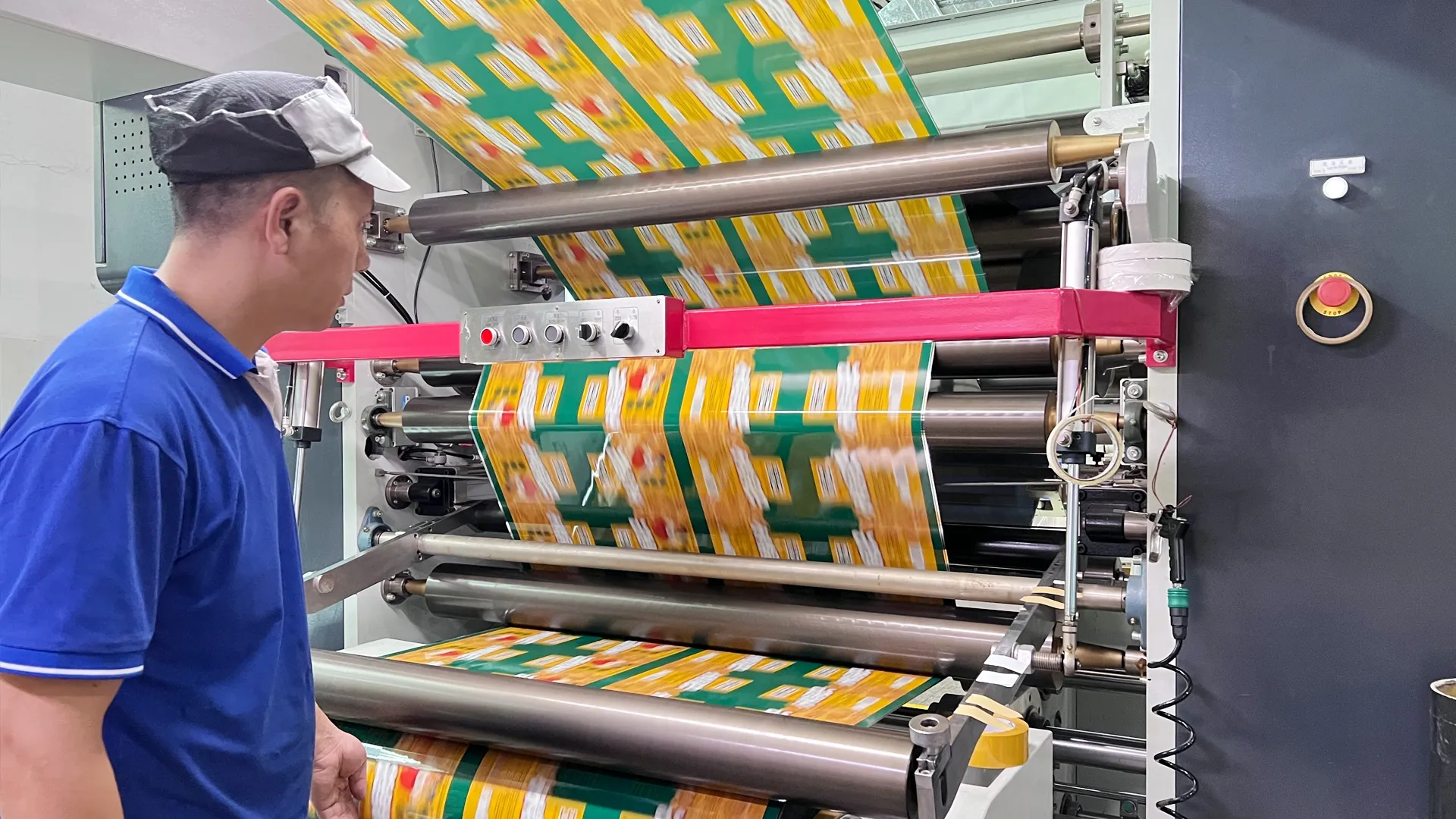
- Presse d'impression électronique à haute vitesse pour l'héliogravure à dix couleurs.
- Machines de laminage à revêtement à sec à grande vitesse et lignes de revêtement sans solvant.
- Machines d'enduction par extrusion permettant de produire des films peu odorants et respectueux de l'environnement.
- Efficace Système RTO pour traiter les émissions de COV, garantissant ainsi une production respectueuse de l'environnement.
Nous sommes fiers de matériel de pointe, gestion rigoureuse de la qualitéet une livraison rapide et fiable pour des clients internationaux.
Travailler avec Paquet Stanley pour des solutions d'emballage souples conformes et hautement performantes.